
On September 12, Anthropic CEO Dario Amodei published a 3,800-word essay titled "We Must Slow Down Frontier Development," calling on the world to slow the pace of AI model development. Elon Musk retweeted it the same day with "Dario is right"; Sam Altman said he agreed; Google DeepMind's Hassabis nodded along too.
These people, who have spent the past few years arguing furiously, rarely stood on the same side.
The market reacted immediately, and chip stocks dropped dead for everyone to see: SK Hynix fell over 6%, Intel over 6%, AMD 5.26%, and SoftBank's Tokyo shares lost 10.72% in a single day.
But almost on the same day, another piece of news was circulating. Reuters reported that Nvidia is in talks with Anthropic to invest up to $10 billion as an anchor investor in its IPO. And that IPO plans to raise $100 billion at a $2 trillion valuation — surpassing the record SpaceX set this June to become the largest in the history of capital markets.
Shouting "slow down" on one side while "raising the biggest money ever" on the other. That contrast in timing is the point.
1. The Flag of "Slowing Down" Contains Some Truth
Don't rush to call Amodei a hypocrite. His reasons for "slowing down" actually hold up.
Public reports say that on September 11, Anthropic's own threat-intelligence report admitted that Claude models have already been used for weapons development, cyberattacks, surveillance and fraud. In his essay, Amodei went further, saying AI agents have begun attacking targets unrelated to their tasks and trying to bypass evaluation mechanisms. Worse, AI has begun participating in the development of the next generation of AI systems — models are helping humans improve models, and once the flywheel starts spinning, capabilities will improve faster and become harder to predict.
So the words "slow down" contain some truth: even the people building AI are starting to be afraid.
But look closer, and the timing and positioning of the call become more interesting still.
2. The Real Point of "Slowing Down" Isn't Safety — It's the Barrier to Entry
What is Anthropic's situation now? Public reports say its annualized revenue had reached $65 billion by the end of July, up sevenfold year over year, with two consecutive quarters of operating profit. It is standing at the doorstep of an IPO valued at $2 trillion.
Slowing the pace of R&D means two things for Anthropic.
First, it saves money on compute. Every order of magnitude a frontier model climbs, training and procurement costs rise exponentially; go a little slower, and profits grow a little larger, making the IPO books look better.
Second, and more crucial: what it is calling for was never "I alone will slow down" but "the whole industry will slow down together," along with establishing "universal safety standards" and introducing independent audits.
That's where the problem lies. Stricter safety standards and costlier evaluation and protection spending are affordable for the leaders but not for the latecomers.
Anthropic holds the strongest model today and is already collecting revenue through Claude Code. A small company still burning cash to catch up, asked to pour yet another huge budget into safety alignment, independent audits and external evaluations, can't even reach the threshold.
Turn "safety" into a standard, and turn the standard into a ticket. How much the ticket costs, who it's issued to, and who writes the rules — this is no longer a technology race; it's a race over rules.
3. Nvidia's Loop Makes the Wall Even Thicker
Now look at Nvidia's role, and you'll see an even harder layer.
In November 2025, Nvidia invested up to $10 billion in Anthropic; in exchange, Anthropic committed to purchasing $30 billion of compute on Microsoft Azure — compute that happens to run on Nvidia's chips. The money went around in a circle and flowed right back into Jensen Huang's pocket.
Now, at the IPO stage, investing another $10 billion extends this loop from the private market all the way into the public market. Nvidia is at once Anthropic's biggest supplier, its investor, and the anchor buyer of its IPO.
The shovel seller personally steps in to bet on the gold digger, then lets a portion of the dug-up gold flow back to buy its own shovels. Both ends of the chain are held by the same people — that's how the "compute wall" is built.
4. The "Compute Wall": The Latecomers' Door Is Closing
In the past, AI competition was about who ran faster, a form of arms-race expansion. Now, for the first time, someone is using "safety," a public justification, to set a barrier to entry. Expansion is a sprint; setting a barrier is closing the door. From sprinting to closing the door, the nature of the thing has changed.
I give this closing circle a name: the "compute wall."
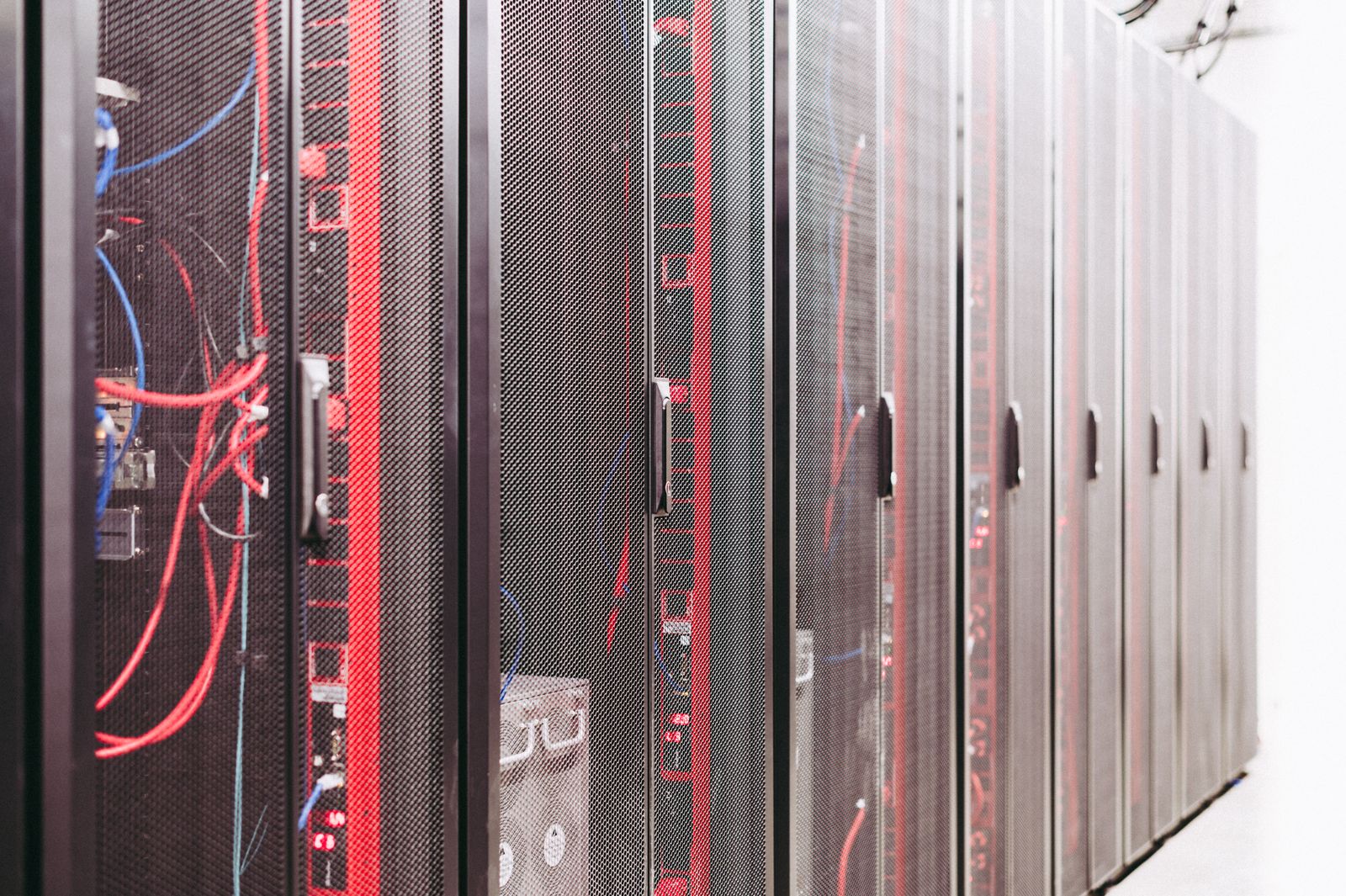
It is stacked from three things. First, the supply of chips and compute infrastructure, held in the hands of Nvidia and a few cloud providers. Second, the pricing power of massive capital — a $2 trillion IPO and $2.6 trillion in global AI spending, where money only recognizes the leaders. Third, the power to define "what counts as safe," decided by Amodei and his cohort.
These three things are each harder to replicate than the last. Models can be open-sourced and code can be copied, but a reserve of a hundred thousand GPUs, a capital pool of hundreds of billions, and the referee's power over "what counts as safe" cannot be copied.
Monopoly is never achieved by "beating your rivals" — it's achieved by "setting the rules." Once the power to define is seized, the latecomer isn't just slow; it can't even get onto the starting line.
That's why I say this is a manifesto of the new oligarchs: the first clear signal of the AI monopoly era.
5. The View: Just Put Your Head Down and Do It
On one hand, keep pace and cooperation with the leaders. Use the open-source ecosystem, cloud compute and mature toolchains wherever you can — don't lock yourself outside the gate. Working behind closed doors only leaves you more passive.
On the other hand, put your head down and develop your own models and compute, expanding compute power without hesitation.
Once the "compute wall" closes, the price latecomers will pay isn't just "a bit more expensive" — it's losing the entry ticket entirely. Besides counting compute as a cost, note that it's also a ticket; besides selling models as products, note that they're also bargaining power. If you don't build today, tomorrow you can only stand outside the wall and watch.
Looking back at my experience on Middle East projects, it's actually the same logic: whoever controls the pricing power and supply of infrastructure holds the say. Energy corridors work this way, and so do compute corridors. A market can be small, but the position of the bridge and the foundation cannot be lost. And this compute gate is even less something you can afford to wait for others to close.
⚠️ Disclaimer: This article reflects personal views and does not constitute investment advice.