
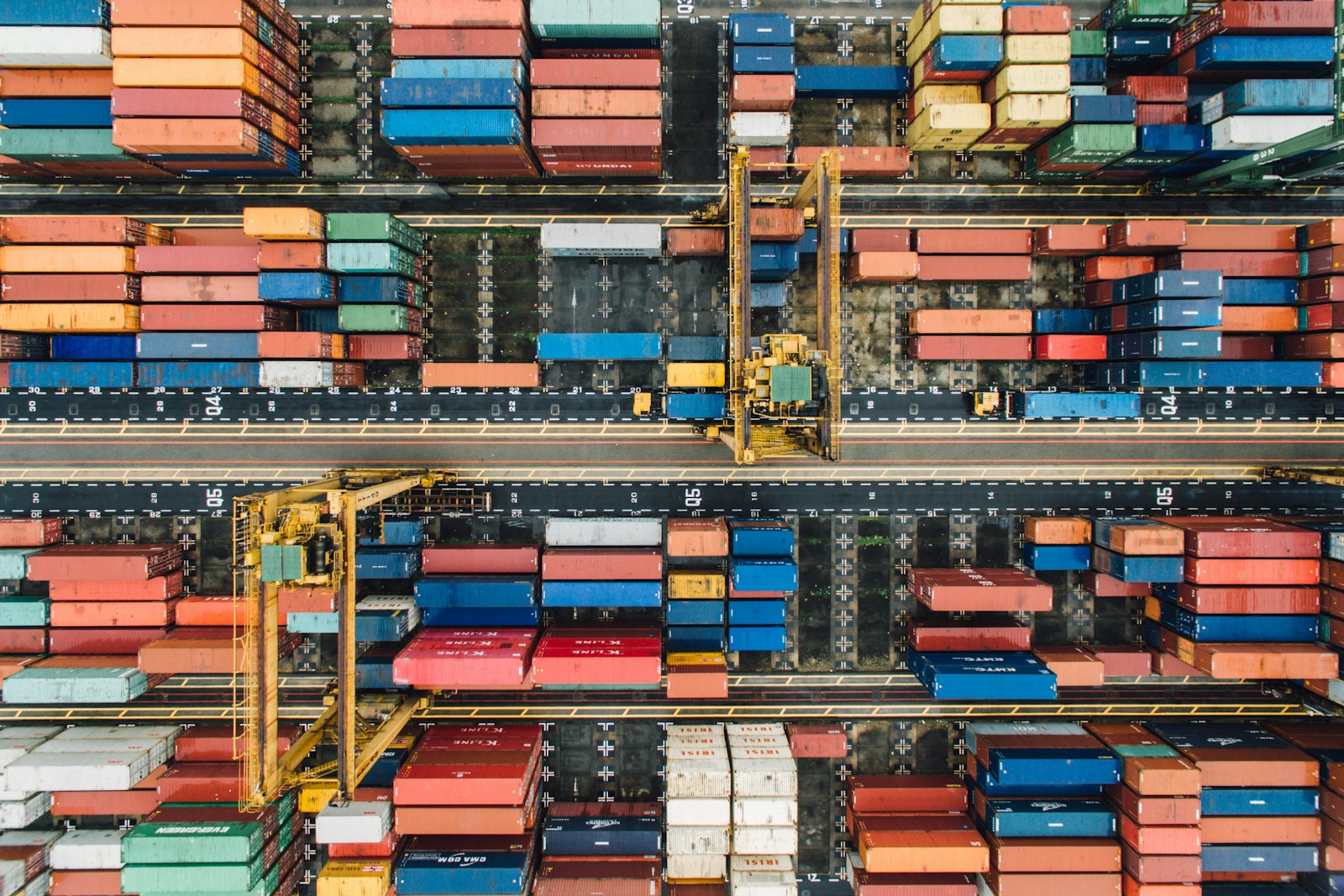
For the past four decades, the story of Chinese companies going global has been a single sentence — make things cheap, then sell them.
That sentence built the "world's factory," but it also pinned Chinese manufacturing to the bottom of the smile curve: we competed on capacity, on price, on delivery speed, earning only a thin layer of processing fees, while the lion's share of profit — technology, standards, brand, and service — was long captured by the upstream of the value chain.
But now, a new curve is taking shape. It is not about selling products; it is about selling capabilities: technology, engineering, standards, and industrial organization — things once locked inside factory walls — are beginning to be exported overseas wholesale, in the form of "solutions."
This is the second curve for Chinese tech companies going global. Whoever grasps it first wins a ticket to the next decade.
I. The Ceiling of the First Curve: Why Product Exports Have Run Their Course
First, let us take a clear look at the old curve.
Chinese manufacturing's product exports are, at their core, a story of "comparative advantage": cheap labor, an engineer dividend, a complete supply chain, and extreme cost control. The achievements of this playbook are there for all to see — solar modules, lithium batteries, home appliances, and consumer electronics have reached monopoly-level global market share.
But it has two ceilings that cannot be avoided.
First, the price war has no end. When everyone in an industry competes on cost, the terminal point of profit margin is zero. The solar industry is the best footnote: China drove module costs to the world's lowest, and in doing so drove the entire industry's gross margin to a historic low. The bigger the scale, the less money made — that is the dead knot of the product-export model.
Second, products can be replaced; capabilities cannot. With a standardized product, a customer who buys yours today can switch to someone else's tomorrow — the competition is on price and lead time. But a "solution" deeply embedded in a customer's production system, once installed, is extremely costly to replace. The former is a flow business; the latter is a stock business.
The ceiling is plain to see: sell only products, and you will always be someone else's supplier; sell capabilities, and you can become someone else's partner.
II. The Second Curve: Three Forms of "Capability Export" Now Taking Shape
So what does "capability export" actually look like? I have condensed the phenomena I have observed on the front lines in the Middle East and Southeast Asia over the past few years into three forms.
The first: from "selling equipment" to "selling a complete solution."
One example that left a deep impression on me is high-end equipment going global. In the past, when Chinese high-end equipment went overseas, companies simply sold the machines one by one — how to install them, how to operate and maintain them, and how to integrate them with the customer's existing systems were entirely the customer's own problem.
Things are different now. Take the Middle East market as an example: what the customer wants is no longer a single gas turbine, but a complete solution "from selection, design, installation, and commissioning to long-term operation and maintenance." The value of the Chinese team has extended from the equipment itself to the capability to deliver — and that is precisely the link that Western suppliers used to lock down with their brand premium. When a Chinese team can turn "delivery" itself into a standardized capability, pricing power begins to shift.
The second: from "selling parts" to "selling safety and standards."
Let me zoom in on the story of a valve. A high-end industrial valve has never been just "a metal component"; it is the key control point of an entire storage-and-transport safety system. In the past, Chinese valve makers could only do OEM work, selling parts to foreign system integrators, who would slap on their own brand and resell them to end customers at several times the price.
The real capability export is that Chinese companies are now beginning to face end customers directly, delivering "valve + storage-and-transport safety solution + standards alignment" as one integrated whole. At that point, what you sell is not steel, but the abstract value of "safety" — and abstract value is what deserves a high gross margin.
The third: from "exporting production capacity" to "exporting the way industries are organized."
This is the most advanced form. The scarcest asset China has accumulated over the past decades is not any particular production line, but the ability to organize a scattered set of suppliers, engineers, and capital into an efficient production system. That capability is now being "exported."
Take new energy going global: after solar, the next battleground is energy storage. Exporting energy storage is not as simple as shipping battery cabinets abroad — it involves local grid-connection standards, integrated solar-plus-storage system design, and the business-model design for long-term operation. What Chinese companies are beginning to export is an entire methodology for "how to get a new-energy business running locally."
III. Why Now: Three Structural Conditions Have Matured at Once
The second curve did not appear out of thin air; three conditions converged at the right moment.
First, the "capability overflow" of Chinese manufacturing. Competition in the domestic market has been pushed to the extreme, and engineers, management experience, and industrial know-how have begun to run in surplus. These capabilities can no longer find room at home, and their best outlet is overseas — especially those emerging markets that have "demand but no capability."
Second, the "capability gap" in emerging markets. The Middle East, Southeast Asia, Latin America, and Africa do not lack money or demand; what they lack is the capability to "land modern industry on the ground." In the past they bought Western products, paying for the capability premium bundled with the product; now they are increasingly willing to buy Chinese capability directly, because it offers better value, faster delivery — and a genuine willingness to teach.
Third, the "window period" of global supply-chain restructuring. Geopolitical maneuvering has disrupted the once-smooth global division of labor, and countries everywhere are rebuilding "secure supply chains." This rebuilding process is, in essence, a new round of negotiation over the industrial division of labor — whoever can offer a bundled package of "product + capability" will occupy a more favorable position in the new division.
IV. The Second Curve vs. the First Curve: The Essential Difference
Put the two curves side by side, and the difference is structural.
| Dimension | First Curve: Product Export | Second Curve: Capability Export |
|---|---|---|
| What is sold | Standardized products | Technology, solutions, standards, organizational methods |
| Pricing logic | Cost + thin margin | Value-based pricing; earn the money of insight |
| Customer relationship | One-off transaction, replaceable | Deep binding, high switching cost |
| Moat | Price, capacity | Trust, delivery track record, industry know-how |
| Profit position | Bottom of the smile curve | Both ends of the smile curve |
| Typical failure | Solar's price war | A tech company that cannot tell a "capability story" |
In one sentence: the first curve competes on being "cheaper"; the second curve competes on being "more understanding." Cheaper can be copied; understanding cannot.
V. Three Judgments for Companies Going Global
Based on my front-line observations, I hold three judgments about this second curve.
First, the threshold for capability export is "trust," not "technology." Technology is not what China lacks; what it lacks is a track record that makes overseas customers believe "you can deliver." That is why every early benchmark case is extremely precious — it is not a money-making project, but a "credential of trust." Without such credentials, no matter how strong your capability, customers will not dare entrust you with an entire solution.
Second, the pricing power of capability export comes from "standards" and "cases." Whoever takes part in setting industry standards and holds replicable success cases possesses bargaining power. This explains why Chinese companies overseas increasingly value labels such as "first," "largest," and "most complex" — they are all bargaining chips for pricing power.
Third, the greatest risk is turning capability export into "capacity relocation." If a company's "capability export" merely moves surplus domestic capacity overseas to keep fighting a price war, that is not the second curve but an overseas version of the first — and the ceiling remains. Genuine capability export must earn the money of "insight and standards," not the money of "cost."
Conclusion
Chinese tech companies going global are moving from "selling things" to "selling capabilities." It is a harder road — but one with a far higher ceiling.
It is harder because it requires companies to shift from "what products do I have" to "what problems can I help customers solve"; and its ceiling is higher because, once a capability is recognized, it builds a moat that competitors cannot breach for a decade.
In the next decade, the winners that emerge among Chinese companies going global will not be the "cheapest," but the "most needed."
⚠️ Disclaimer: This article is a sharing of personal views and does not constitute any investment advice. All cases in the article have been anonymized.