
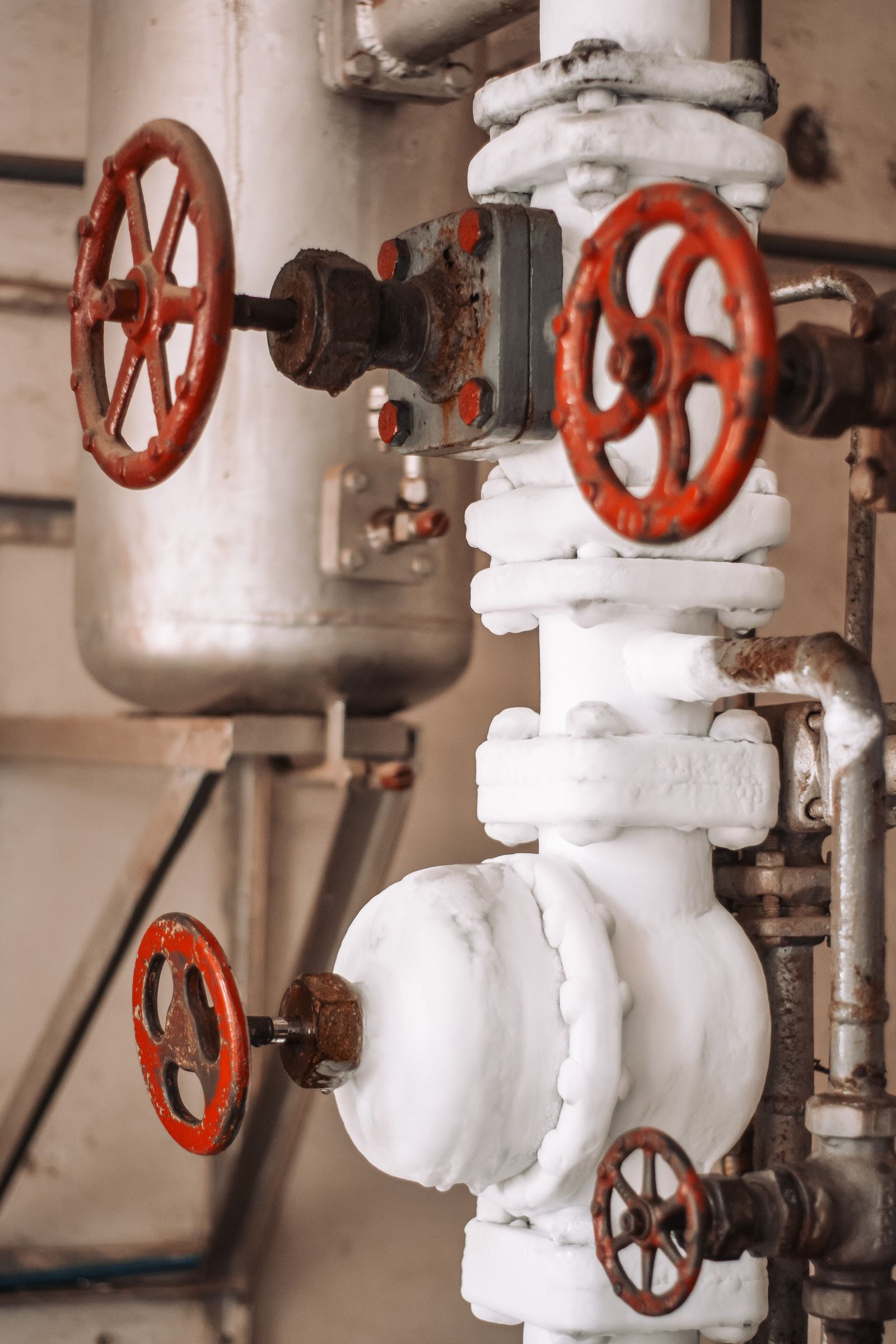
Last year, while pushing a project forward in the Middle East, a client handed me a list of critical equipment to procure. On the line for "valves," he had drawn a heavy red circle and written three words beside it: "Don't cut corners."
I didn't pay it much attention at the time. Valves, after all, are the least glamorous category of industrial equipment — they have neither the aura of a "national treasure" like a gas turbine, nor the seductive tech narrative of semiconductors. Inside a refinery, they lie quietly on the pipelines, and no one ever spares them a second glance.
It wasn't until later, when I seriously studied this industry, that I realized that client's "don't cut corners" concealed a Middle East golden track that is badly undervalued.
1. A "Hidden Champion" Industry, and Why It Is Undervalued
Valves may be the least conspicuous, yet most ubiquitous, component in the industrial world.
Oil refining, chemicals, power generation, desalination, urban pipeline networks — almost every scenario that requires "controlling fluid" depends on them. But precisely because they are a "supporting component" rather than the "main machine," the spotlight of the capital markets rarely falls on them.
This is precisely the first reason the industry is undervalued: it hides in the "backlight" of the industrial chain.
The second reason it is undervalued is that its value lies not in being "expensive," but in being "critical."
A single gas turbine may be worth tens of millions, but among the hundreds or thousands of valves mounted on it, if just one loses its seal under high temperature and pressure, it can shut down an entire production line. My client put it bluntly: "The money you save on valves isn't even enough to cover one unplanned shutdown." In the petrochemical industry, the loss from a single unplanned shutdown can easily run into the millions of dollars.
So the business of high-end valves is, at its core, about "selling safety," not "selling steel." Its pricing logic has never been cost-plus; it is "the price of an accident."
2. Why the Middle East Is a "Golden Track"
If the valve industry itself is undervalued, then the combination of "the Middle East + valves" is doubly undervalued.
In the first installment of my Middle East Field Notes, I wrote that the entire Arabian Peninsula is playing a grand game of shifting "from selling oil to selling chemicals." Saudi Arabia, the UAE, Qatar, and Kuwait are all transforming themselves from "crude oil exporters" into "refined and petrochemical product exporters."
What does this mean for valves? Let's do some quick arithmetic:
First, the volume of new capacity. In a large integrated refining and petrochemical project, valve procurement typically accounts for 5% to 10% of total equipment purchases, while in a project worth ten billion dollars, equipment procurement alone may account for 30% to 40%. The expansion of bases across Saudi Arabia — Jazan, Yanbu, Jubail — alone represents an astronomical demand for valves. Moreover, since refinery units run at high temperatures, high pressures, and with highly corrosive media, the share of high-end valves is far higher than in ordinary industries.
Second, desalination — the "hidden mega-market." The Middle East is the world's largest desalination market; a large share of the fresh water in Saudi Arabia and the UAE is "squeezed out of the sea" through reverse-osmosis membranes. High-pressure pumps, energy-recovery devices, and corrosion-resistant valves — these are all hard requirements for desalination plants, and the highly saline, corrosive nature of seawater means almost only high-end corrosion-resistant valves are used here.
Third, and the most easily overlooked: the "replacement and upgrade wave" driven by the safety premium. As I wrote in my previous piece, refining and petrochemical assets along the Red Sea and the Gulf are being repriced by geopolitical risk — key equipment must be dispersed, control rooms hardened, and insurance premiums raised. As the "last physical gate of safety," valves are being upgraded from "good enough if they work" to "must be reliable." This creates a twofold demand: higher standards for new projects, and preventive replacement for existing ones.
Fourth, valves are wearing parts with continuous repurchase demand. Unlike equipment such as gas turbines that you "buy once and use for twenty years," a valve's seals and stems wear down and corrode, and after a few years of operation they must be inspected and replaced. This means that once you enter a customer's supply chain, you secure a cash flow that lasts for many years.
Volume (refining expansion) × price (safety premium) × repurchase (wearing parts) — these three factors stacked together are why I call it undervalued.
3. The Global Landscape: Western Monopoly on the High End, and China's Window of Opportunity
The global landscape of this track can be summed up in one sentence: the high end is monopolized by Western companies, the mid-to-low end is flooded with Chinese capacity, and a crack is being torn open in the middle.
The first tier of global high-end industrial valves has long been held by a handful of Western giants — Emerson (Fisher), Flowserve, IMI, Velan, plus a group of German and Italian hidden champions. What they rely on is decades of operating data and materials know-how, and — most crucially — customer certification and trust.
Where does the difficulty of high-end valves lie? Not in "making them," but in "being recognized."
The owner of a refining project can hardly risk a "leak, shutdown, or explosion" for a new supplier's valves. The high-end valve market is therefore, at its core, a "certification-driven market": certification cycles easily take three to five years, and once you're in, you're hard to replace; if you're not in, it's very hard to get in.
But the crack is emerging, and the direction favors China:
First, cost-effectiveness. Western high-end valves carry an extremely high premium, while Middle Eastern owners — amid volatile oil prices and massive transition spending — are becoming increasingly cost-sensitive.
Second, supply-chain security. Geopolitical conflicts have made Middle Eastern clients realize that staking the safety lifeline of core equipment on a handful of Western suppliers is itself a risk. They need a "second supplier" to hedge against it.
Third, Middle Eastern clients' attitude toward China is shifting from "cheap goods" to "a reliable alternative." In recent years, Chinese engineering firms have built a large number of refining, power, and desalination projects across the Gulf, taking their equipment overseas along with the projects. Chinese valve makers have also ridden this wave abroad and gradually made their way onto Middle Eastern owners' lists of qualified suppliers.
This crack is precisely the window of opportunity for Chinese high-end valve companies — upgrading from "selling products" to "selling certification + service + safety."
4. An Investor's Judgment
Finally, let me share a judgment from an investor's perspective — I discuss only industrial logic and recommend no individual stocks.
In my view, the Middle East high-end valve track is brewing a structural opportunity whose driving forces can be summed up in three words: volume, price, and substitution.
- Volume: the refining expansion and desalination drive across the Arabian Peninsula provides a demand base lasting more than a decade, not a one- or two-year event-driven opportunity.
- Price: the safety premium is pushing this industry from "manufacturing" toward "safety services," and the value share of high-end valves will only grow.
- Substitution: China's ability to deliver engineering and manufacturing overseas is turning "homegrown high-end valves" from impossible into possible, and from possible into validated.
But this opportunity is not without its threshold. The biggest risk is not technology but time — certification cycles are long and customer trust builds slowly. This means that those who can truly capture this wave of dividends are the players who already have projects, certifications, and service networks in the Middle East, not the "storytellers" starting from zero.
So my judgment is simple: this is a track that rewards patience and persistence, and the Middle East is, for now, its richest and most certain market.
Final Thoughts
From gas turbines to high-end valves, my years of working on projects in the Middle East have made me increasingly certain of one thing:
Chinese companies going global is no longer just about "selling products"; it's about "turning the safety others dare not bet on into a capability we can deliver."
High-end valves are one of the best footnotes to this judgment.
⚠️ Disclaimer: This article reflects personal views and does not constitute any investment advice. All cases cited have been anonymized.