
Over the years I've spent working on projects in the Middle East, one kind of news keeps popping up on my phone every now and then — some oil field or pipeline has been "visited" by drones again. Most of the time, I glance at it and swipe it away.
But there is one kind of news that makes me stop and stare for a long time: this time, what was hit wasn't an oil field, wasn't a pipeline — it was a refinery.
Late on the night of August 13, a one-line push notification from Cailianshe arrived: "SABA, controlled by the Houthis, claimed an attack on a Saudi Aramco refinery located in JAZAN." I stared at that single line for quite a while — not because of "another strike" (attacks in the Middle East have long ceased to be news), but because that line landed on an asset more expensive and harder to replace than an oil field.
1. Striking an Oil Field and Striking a Refinery Are Two Different Things
Over the past decade, the protagonists of "energy attacks" in the Middle East's geopolitical conflicts have mostly been oil fields and pipelines.
In September 2019, the Houthis used drones to attack Saudi Aramco's Abqaiq and Khurais oil fields, briefly halving Saudi Arabia's crude production by 5.7 million barrels per day and sending global oil prices up nearly 20% that day. That time, the target was the upstream.
When the upstream is hit, the logic is simple: crude production falls → supply contracts → prices rise. The market can price it with a well-established formula, and the panic comes fast and goes fast. The moment Saudi Arabia said "production will resume within weeks," prices fell back.
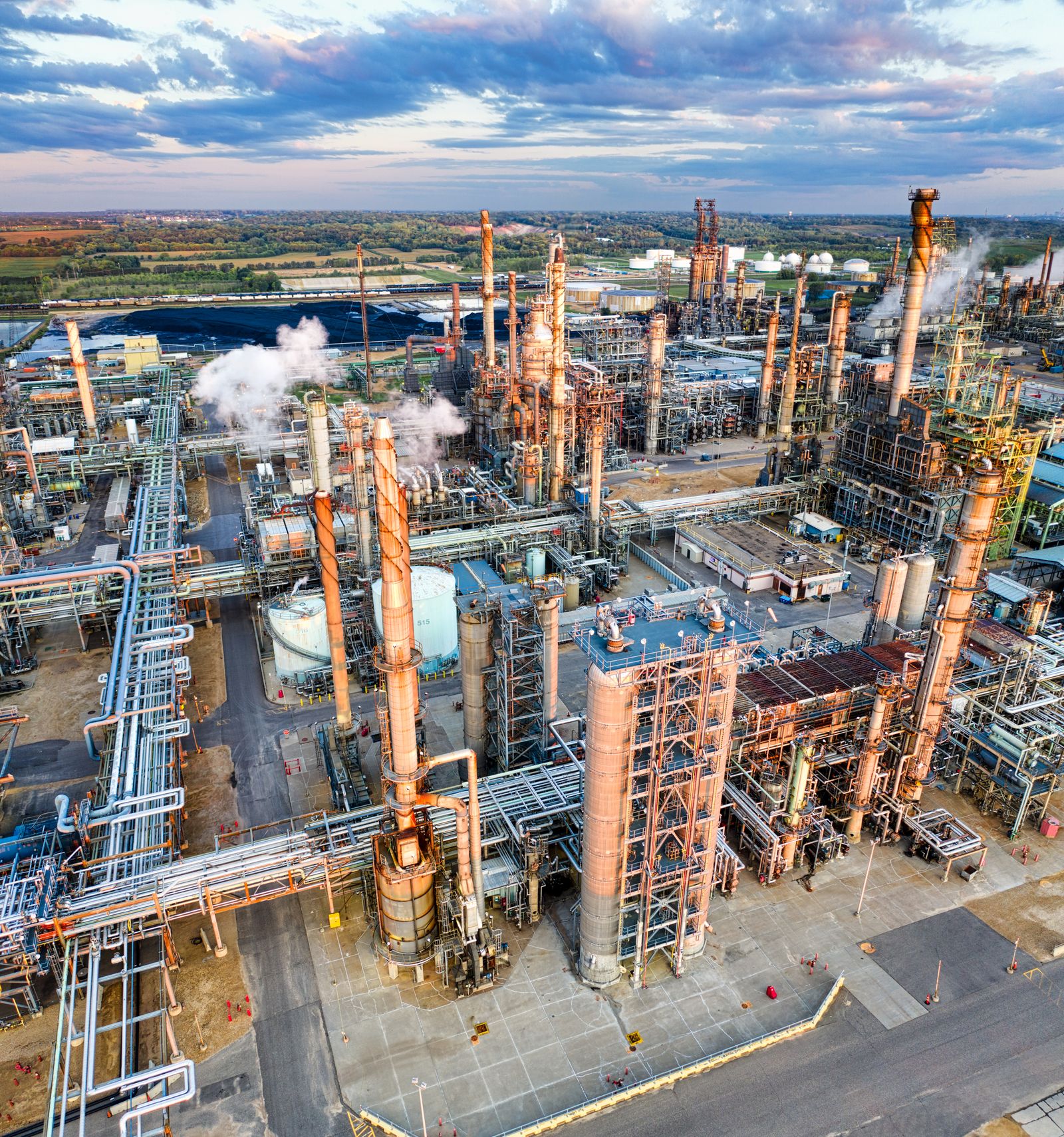
But a refinery is different. A refinery belongs to the midstream — it connects the most complex and hardest-to-replace link between "crude oil" and "refined products."
The Jazan refinery, on the Red Sea coast of southwestern Saudi Arabia, is one of Saudi Aramco's most important refining and petrochemical projects in recent years, with a designed processing capacity of about 400,000 barrels per day, complemented by an IGCC combined-cycle power plant and a large petrochemical complex. It is not merely about "turning crude oil into gasoline"; it is a key piece in Saudi Arabia's strategic transformation "from selling crude oil to selling chemicals."
So when a rocket or a drone lands on a refinery, what is truly disrupted is not a few days of output, but the security expectations of an entire industrial chain.
2. The Entire Arabian Peninsula Is Playing a Game of "From Selling Oil to Selling Chemicals"
Many people's understanding of the Middle East is still stuck on the stereotype of "oil tycoons digging in the desert."
But if you've actually been to Riyadh or Abu Dhabi, or spoken with teams from Saudi Aramco or the Abu Dhabi National Oil Company (ADNOC), you'll find that the thing they're most anxious about right now is precisely this: their long-term pricing power over oil is loosening.
Hence Saudi Arabia's "Vision 2030," and the UAE's, Qatar's, and Kuwait's respective "post-oil" roadmaps. Their single most central industrial logic is the same: to transform themselves from "crude-oil exporters" into "exporters of refined and petrochemical products" — rather than selling cheap crude to Asian refiners and letting others pocket the refining margins, they would rather refine the oil themselves into plastics, synthetic fibers, fertilizers, and specialty chemicals, and sell those instead.
This explains why, in recent years, a long string of refining and petrochemical bases — from Saudi Arabia's Jazan, Yanbu, and Jubail to the UAE's Ruwais, Qatar, and Kuwait — has been expanding at a frantic pace. The Arabian Peninsula isn't building refineries piecemeal; it is collectively erecting a downstream chemical empire spanning the Red Sea and the Gulf.
And the empire's soft spot is precisely its geography — it must be built on seaports, and those seaports are all exposed within the range of geopolitical firepower.
On the Red Sea side, Yemen lies to the south, and the range of the Houthis' drones and missiles happens to cover that string of refining facilities along the coast. On the Gulf side, Iran sits across the water, and the world's most critical oil-and-gas chokepoint — the Strait of Hormuz — is wedged right in the middle of the outlet.
In other words: the Arab world has built its most valuable assets in the places easiest to reach. This is not a mistake but a dilemma — the Red Sea is the nearest seaport to the European market, and the Gulf is the inevitable passage to the Asian market. To transform, they must build plants at the seaports; and building at the seaports means putting "security" back on the table and recalculating it.
This is an equation Saudi Arabia and the Gulf states understand better than anyone — yet they still choose to place the bet.
3. The "Safety Premium": A Cost Being Repriced
In my past work on Middle East projects, dealing with local EPC (engineering, procurement, and construction) contractors and owners, one feeling has grown increasingly strong:
There is a hidden cost in Middle East energy projects that is rising rapidly — the cost of security.
In the past, when owners drew up budgets, things like security guards, perimeter walls, and anti-drone systems were "an inconspicuous line in the cost sheet." Not anymore. Every new refining or petrochemical project along the Red Sea and the Gulf must now write "attack resilience" into its technical specifications from the design stage onward:
- Critical equipment must be laid out in a dispersed manner to prevent a single piece of shrapnel from paralyzing an entire production line;
- Control rooms must be hardened, or even moved underground;
- Anti-drone systems must cover the airspace above the plant;
- Insurance premiums rise year after year, and insurers have begun pricing "geopolitical risk" separately.
All these costs will ultimately be folded into the "factory-gate price" of refined products. I call this the safety premium on Middle East energy assets.
For global markets, this signals a deeper shift: the "cost advantage" of Middle East refined products is being steadily eroded by geopolitical risk. When "the cheapest Middle East oil" is no longer quite so cheap, the center of gravity of the global energy supply chain will quietly begin to move.
And for certain others, this is precisely an opportunity.
4. China's Opportunity: Not Selling Products, but "Security-Rebuilding Capability"
Let's come back to ourselves. On the Middle East energy front, Chinese companies have mainly been "selling equipment" in the past — valves, pipes, compressors, pumps.
But if you grasp the logic of the "safety premium," you'll discover a new angle of entry:
When the Arab world needs to rebuild, harden, and disperse its refining assets, what it requires is a complete "risk-resilient systems-engineering capability," not merely individual products.
For example:
- Modular design of refinery plants, so that key units can be quickly dismantled and rebuilt elsewhere;
- Distributed energy to reduce dependence on a single large facility;
- Industrial-grade monitoring and defense systems integration;
- And even the most down-to-earth of all — cost-effective engineering, procurement, and construction capability that lets the Gulf states spread capacity across more, smaller plants at lower cost.
These are exactly what Chinese equipment manufacturers and engineering firms are best at: not building the most expensive, most advanced single point, but building a system that is sufficient, reliable, and rapidly replicable.
This matches my own experience pushing gas-turbine and high-end valve projects in the Middle East: what Middle Eastern clients truly lack has never been "a better product," but "a partner who can still deliver steadily amid the chaos."
Whoever can help them turn "security" into a calculable, replicable engineering capability will claim the largest share in the next round of energy rebuilding.
5. Final Thoughts
An attack on the Jazan refinery is, on the surface, geopolitical news; behind it, an entire energy supply chain is being repriced.
For the Gulf states, this is the growing pain on the road to transformation; For the world, it is the loosening of the "cheapest Middle East" myth; For Chinese companies, it is a window for upgrading from "selling products" to "selling capability."
I will keep writing my Middle East field notes, piece by piece. There is no grand narrative here — only the real industrial changes that one investor has observed on the shores of the Red Sea and at project sites.
⚠️ Disclaimer: This article is an industry observation and does not constitute any investment advice.